AccessFlora grows a whole-cell, DHA-rich microalga as a pure culture in closed, sterile bioreactors — sealed off from the ocean, wild algae, and other shellfish — and delivers it as a ready-to-use concentrate. Clean, reliable nutrition for oyster, clam, and shrimp hatcheries, without depending on wild fish or fragile live cultures.
We ferment our own proprietary marine microalga — one that naturally makes DHA its dominant omega-3 — and harvest the whole cells into a liquid concentrate. Nothing is extracted or solvent-refined: the oil stays packaged inside the cell, the way filter feeders find it in nature.
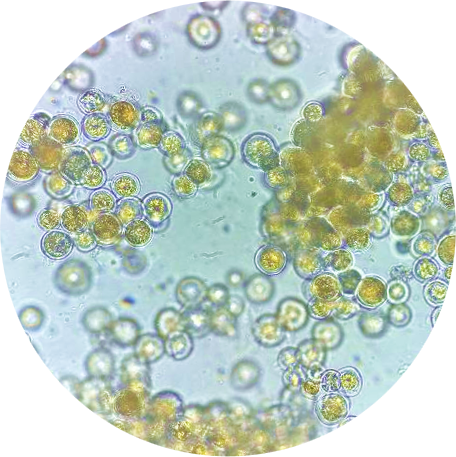
No inoculating, culturing, counting, or harvesting. Measure, dilute, and feed — and put the hours back into your animals.
A shelf-ready feed that can't crash overnight. Use it to supplement or back up your live algae, and keep feeding on schedule.
Grown as a pure culture in sealed, sterile vessels — never in contact with open water, wild algae, or other shellfish.
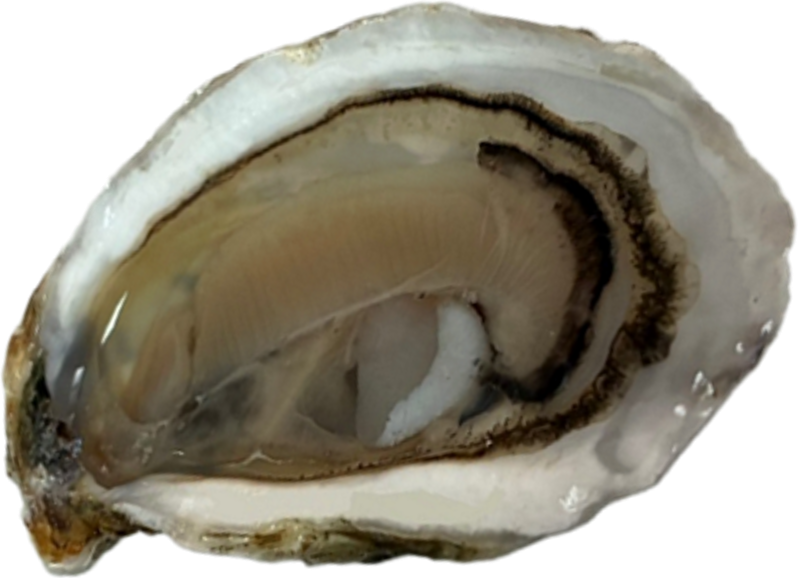
Shellfish hatcheries are our first market — filter-feeding larvae take up whole cells directly, so there's no extraction step between our bioreactor and your tanks.
Oyster and clam larvae filter particles straight from the water column. Our whole-cell concentrate gives them a direct DHA source alongside — or partially in place of — the live algae you already grow.
Penaeid larvae pass through algae-feeding stages before moving to live and formulated feeds. DHA supports development, stress tolerance, and post-larval quality.
Live prey are only as nutritious as what they eat. Feeding DHA-rich microalgae to rotifers and Artemia before they go to the larval tanks is a standard way to raise their omega-3 content.
The same fermentation platform scales beyond the hatchery. Through university research partnerships we're working toward omega-3 inputs for salmon and finfish feeds — and longer term, livestock, pet, and food applications where fish oil isn't a fit.
Working with a species that isn't listed? Tell us about your hatchery.
Dose to the animals you're feeding, then check it against your tank volume. All rates are daily starting points in mL of concentrate — split them across two or more feedings and adjust to clearance and growth.
Supplement. Fed alongside your live algae — about half of a full daily ration by dry weight.
Full ration. Covers the whole daily algae ration by dry weight — for backup feeding or when live cultures are down.
mL of concentrate per day. Pre-dilute about 10:1 in system water before adding.
| Stage | Basis | Light (mL/day) | Heavy (mL/day) |
|---|---|---|---|
| Broodstock | per gram wet meat weight | 0.015 – 0.03 | 0.03 – 0.06 |
| Broodstock | per adult | 0.15 – 0.6 | 0.3 – 1.2 |
| Seed / spat | per gram live weight | 0.35 | 0.7 |
| Seed, 0.3 mm | per million | 3.5 | 7 |
| Seed, 0.5 mm | per million | 25 | 50 |
| Seed, 1 mm | per million | 107 | 214 |
| Seed, 2 mm | per million | 800 | 1,600 |
| Seed, 3 mm | per million | 2,450 | 4,900 |
Why mL per 1,000 L? Per-liter doses are small fractions of a milliliter, so we express tank-level rates per 1,000 L. Each 1 mL of concentrate adds about 80 mg of dry cells.
Larvae and other species. Larval rates depend on species, stage, and stocking density — we'll set them with you when you start feeding.
Why this microalga? Many omega-3 sources deliver a mix of fats. Our strain makes DHA its dominant long-chain omega-3, with little else competing for space — the fatty acid larvae need most during early development. And because we feed the whole cell rather than an extracted oil, that DHA reaches your larvae still protected inside the cell membrane.
Most of the world's omega-3 still comes from small wild fish. As aquaculture grows, that supply can't keep up. Fermented microalgae make DHA at the source — the same place fish get it in the first place.
Fish don't make omega-3s — they accumulate them from algae. We skip the middle step and grow the algae directly.
Fermentation runs year-round, in any climate, close to customers — not tied to a single fishery half a world away.
Hatcheries are the beachhead. The same organism and process point toward aquafeed, animal nutrition, and food ingredients.
Our feed is already raising oysters, and production is scaling to supply more hatcheries.
Proprietary strain isolated and characterized; cultivation scaled from 1 L bottles to 1,000 L vessels.
Oysters in a commercial aquaculture facility are being raised on our product today.
Expanding supply to bivalve hatcheries in New England and Atlantic Canada, then shrimp pilots in Ecuador in 2027.
Finfish feed applications and certified food-grade ingredient lines from the same platform.
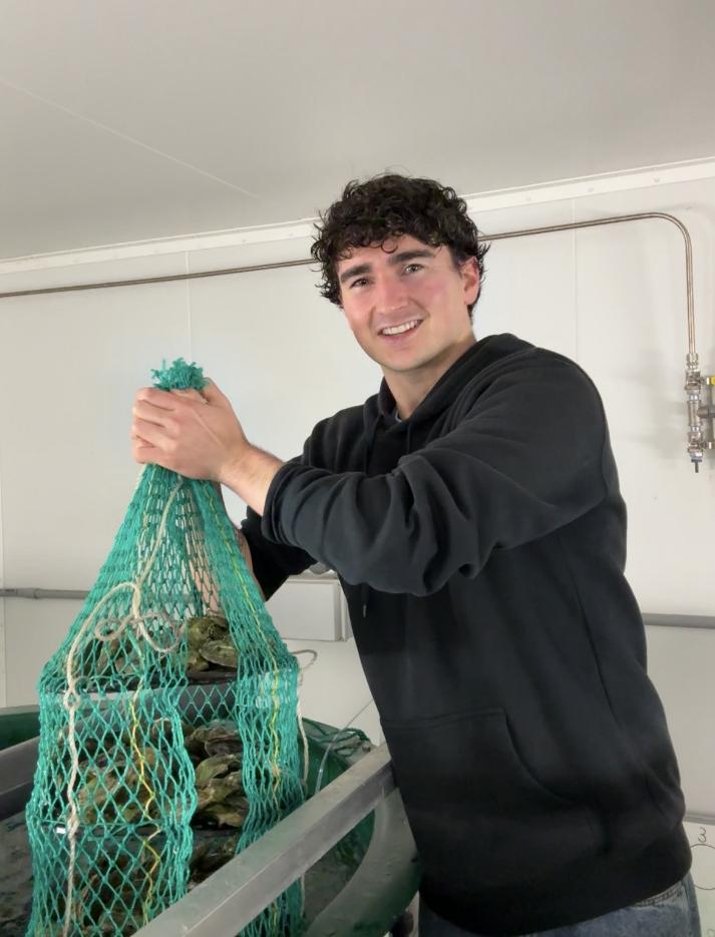
I'm Keegan Jalbert. I learned about different aquaculture practices from Australia, Ecuador, and Connecticut, and I found the same problem exists everywhere: seafood around the world depends on a fragile, wild source of omega-3.
So I isolated and bred a DHA-producing microalga and built a fermentation process around it with the University of Connecticut. AccessFlora's mission is simple: give hatcheries a reliable, fish-free omega-3 they can plan around — and grow that platform into a real alternative to fish oil.
Proven in our own oysters. Our SureSweet line conditions oysters on this feed as a working demonstration of the product. See SureSweet →
The best starting point is a conversation about your species, your current feed program, and what you'd like to improve. Get in touch to start feeding.
 AccessFlora